Best Zari Yarn for Saree Weaving
Learn how to select the best zari yarn for saree weaving based on denier, TPM, strength, colour, flexibility, loom type and saree application.
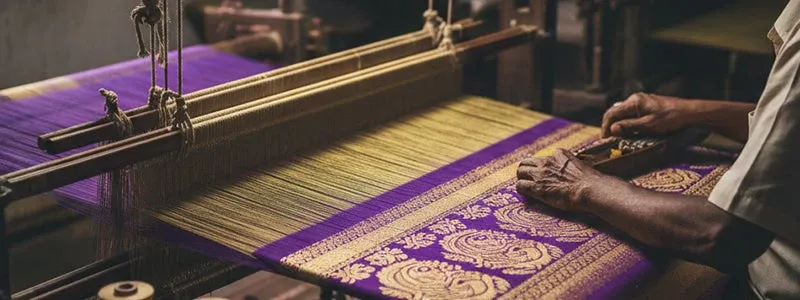
Choosing the best zari yarn for saree weaving depends on the type of saree, loom, fabric construction, required shine, yarn strength, flexibility, colour, and final design. There is no single zari yarn that is perfect for every saree.
For weaving units and saree manufacturers, the correct zari specification can improve fabric appearance, weaving performance, design clarity, and production consistency.
Zari yarn is commonly used in saree borders, pallus, motifs, buttas, jacquard patterns, brocade designs, and decorative highlights.
What Is Zari Yarn in Saree Weaving?
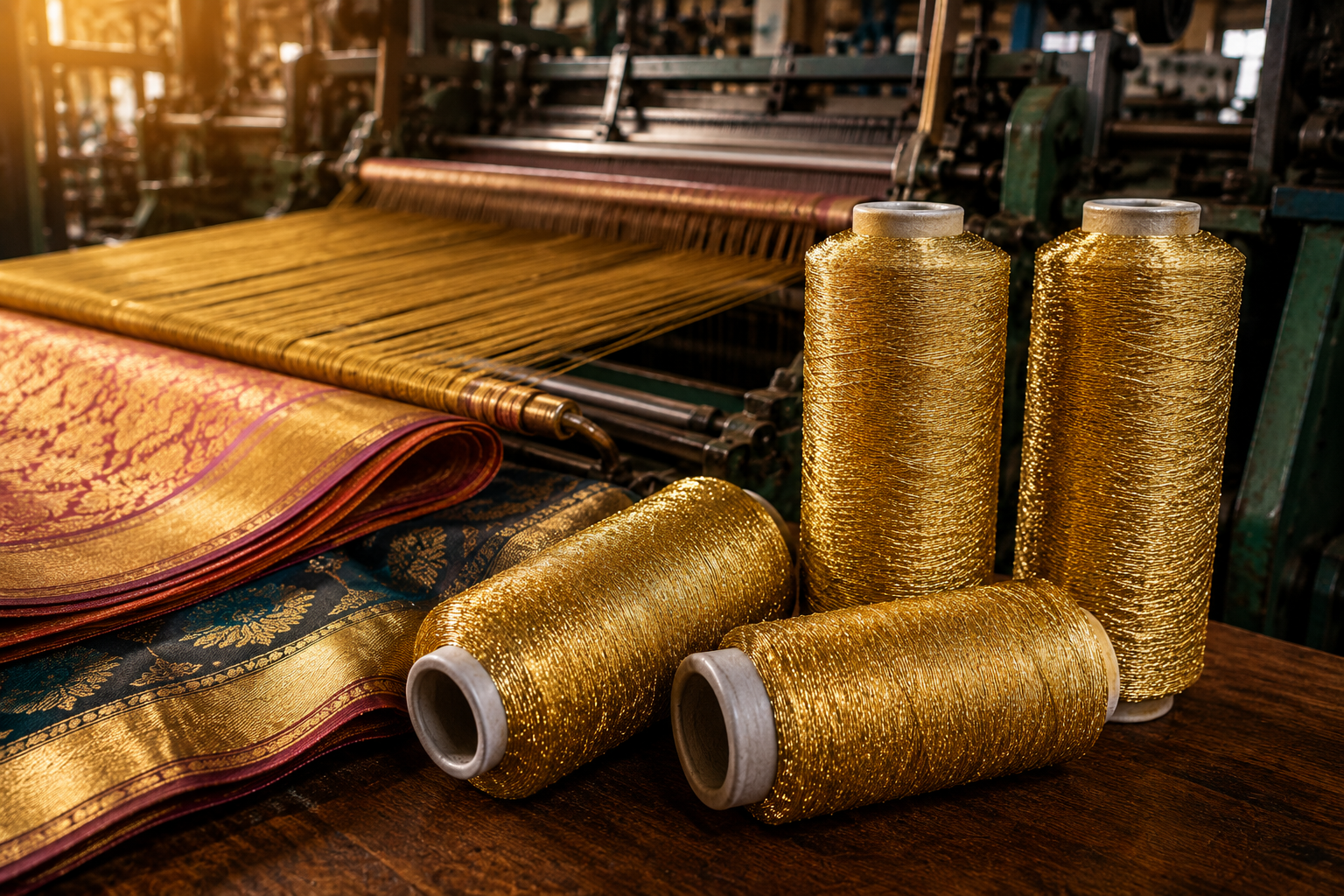
Zari yarn is a decorative metallic yarn used to create gold, silver, copper, coloured, and other reflective effects in sarees.
Modern zari yarn can be manufactured using metallised polyester film combined with polyester, nylon, rayon, or other supporting yarns.
Depending on the construction, the metallic component may be wrapped, twisted, or combined with another yarn to provide the required appearance and strength.
The final yarn specification should match the saree fabric and weaving process.
Why Is Zari Yarn Important in Sarees?
Zari is one of the main decorative elements used in many Indian sarees.
It can be used to create:
- Saree borders
- Pallus
- Buttas
- Floral motifs
- Geometric patterns
- Temple designs
- Jacquard patterns
- Brocade effects
- Stripes
- Decorative highlights
The correct zari yarn can give the saree a more refined and attractive appearance while maintaining good weaving performance.
Which Zari Yarn Is Best for Saree Weaving?
The best zari yarn depends on the saree construction and required effect.
Some applications require a soft and flexible zari, while others need a stronger and more compact yarn.
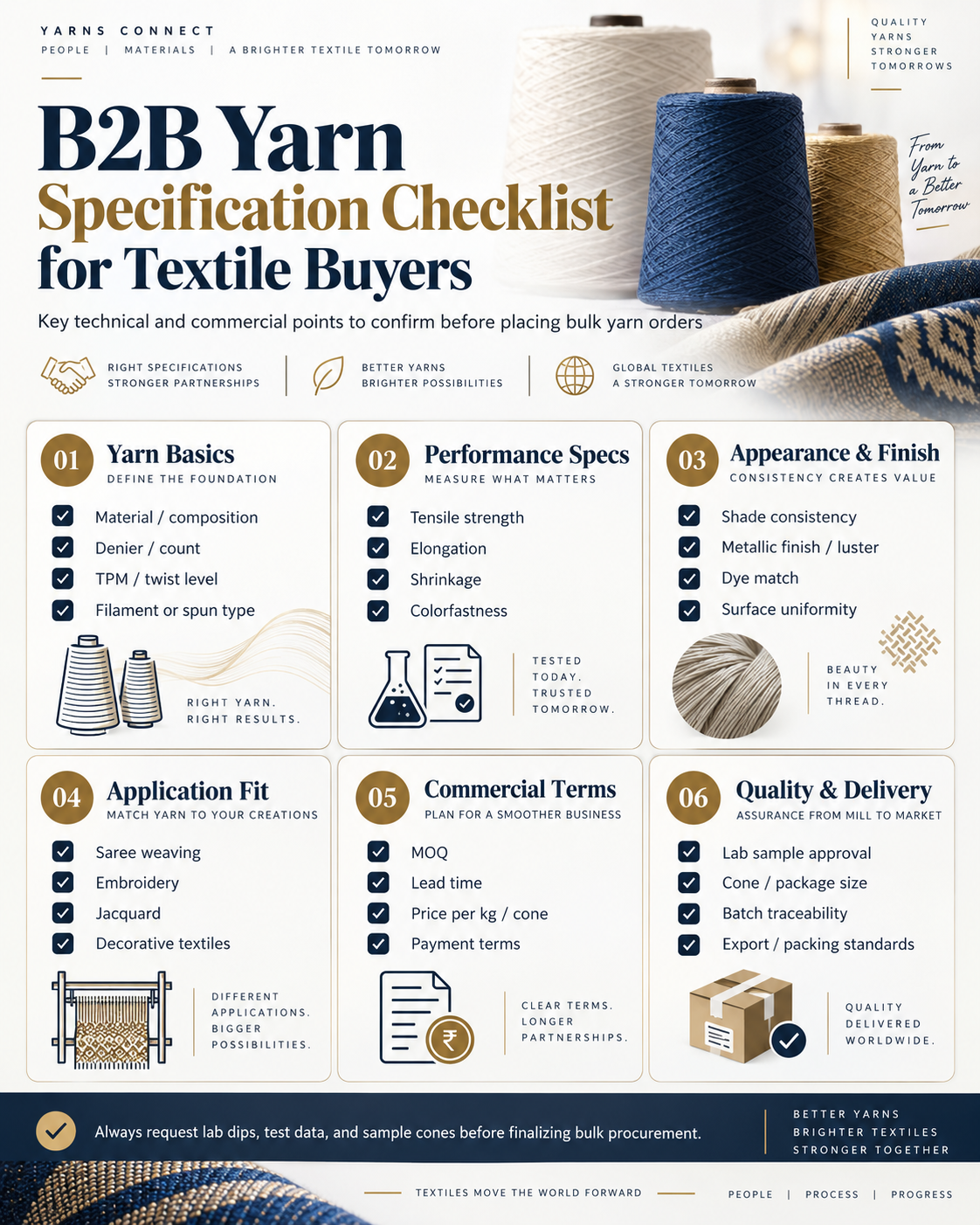
When selecting zari yarn, manufacturers should consider:
- Saree fabric
- Loom type
- Weaving speed
- Pattern complexity
- Required metallic shine
- Denier
- TPM
- Yarn strength
- Flexibility
- Colour
- Core yarn
- Required quantity
The complete specification is more important than selecting zari based only on colour or appearance.
Zari Yarn for Different Saree Applications
Zari for Saree Borders
Borders may require zari with good visual definition and stable weaving performance.
The yarn should maintain its structure while creating clear decorative lines and patterns.
The required denier and TPM depend on the border design, fabric, and loom.
Zari for Saree Pallu
A saree pallu can contain detailed jacquard, floral, traditional, or geometric designs.
Zari used for the pallu should provide a balance between shine, flexibility, and pattern clarity.
The correct yarn construction helps achieve consistent appearance across larger decorative areas.
Zari for Buttas and Motifs
Small motifs and buttas often require good yarn control.
The zari should work smoothly through the weaving process and produce clean decorative details.
Zari for Brocade Sarees
Brocade weaving may use a higher amount of metallic yarn to create rich ornamental surfaces.
The zari specification should be selected carefully because yarn strength, twist, thickness, and surface finish can affect both weaving performance and final fabric appearance.
Zari for Jacquard Sarees
Jacquard designs can contain complex patterns.
A consistent zari yarn specification is important because irregularity in yarn construction may affect design uniformity and production efficiency.
Important Specifications for Saree Zari Yarn
Denier
Denier represents the linear density or fineness of the yarn.
Lower and higher denier yarns can create different visual effects and fabric structures.
The correct denier should be selected according to the saree design and weaving requirement.
TPM
TPM stands for Twists Per Meter.
It indicates the number of twists present in one meter of yarn.
TPM can influence:
- Yarn firmness
- Flexibility
- Stability
- Surface appearance
- Component binding
- Weaving performance
A lower or higher TPM may be required depending on the yarn construction and application.
Colour
Common zari colours include:
- Gold
- Silver
- Copper
- Rose gold
- Antique gold
- Coloured metallic shades
- Custom shades
Colour selection should complement the saree base fabric and design.
Core Yarn
The supporting core yarn can influence strength, flexibility, and overall performance.
Polyester, nylon, rayon, and other yarn types can be used depending on the required construction.
Metallic Film
The type, width, colour, and finish of metallic film can affect the final shine and appearance of zari yarn.
Tensile Strength
Adequate tensile performance is important because the yarn must withstand tension during weaving.
Weak or inconsistent yarn can create production interruptions or quality problems.
Soft Zari vs Firm Zari for Sarees
Different saree constructions may require different yarn characteristics.
Soft and flexible zari may be suitable where drape, comfort, and flexibility are important.
Firmer zari may be preferred where more defined structure, stronger pattern visibility, or stable weaving performance is required.
Neither type is automatically better.
The best option depends on the fabric and application.
How Zari Yarn Affects Saree Appearance
Zari yarn can significantly influence the visual character of a saree.
Different specifications can create:
- Bright metallic shine
- Softer metallic reflection
- Antique appearance
- Strong gold effect
- Subtle decorative highlights
- Detailed motifs
- Rich brocade surfaces
Designers and manufacturers should evaluate the yarn together with the base fabric rather than selecting the zari separately.
Zari Yarn for Handloom Sarees
Handloom weaving can require different yarn behaviour compared with high-speed powerloom production.
Flexibility, handling, smoothness, and consistency are important.
For handloom applications, the yarn should suit the weaving technique and traditional fabric construction.
The weaver's requirement should always be considered before finalising the zari specification.
Zari Yarn for Powerloom Sarees
Powerloom production may operate at higher speeds and can require more consistent yarn strength and construction.
Manufacturers should evaluate:
- Yarn breakage
- Tensile performance
- TPM consistency
- Denier consistency
- Surface smoothness
- Machine compatibility
A stable yarn specification can help reduce production interruptions.
How to Select Zari Yarn for Your Saree
Before ordering zari yarn, provide your supplier with complete information about the intended application.
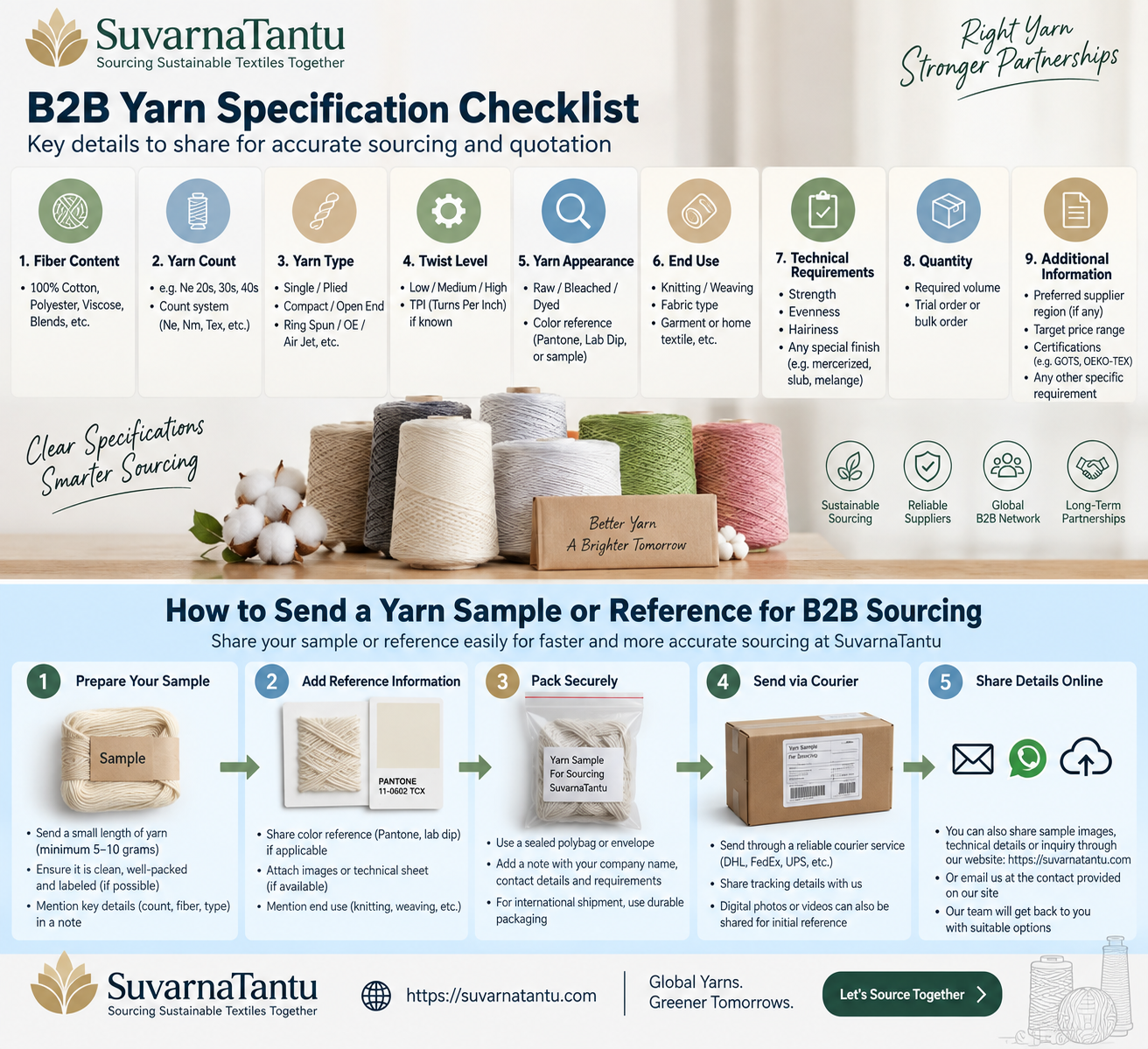
Useful details include:
- Saree type
- Fabric type
- Handloom or powerloom
- Border, pallu, motif, or all-over design
- Required colour
- Required denier
- Required TPM
- Required finish
- Machine specification
- Sample reference
- Production quantity
If the exact technical specification is not known, a fabric or yarn sample can help during development.
Why Batch Consistency Matters
For commercial saree manufacturing, consistency from one production batch to another is important.
Differences in colour, shine, denier, TPM, or yarn construction can affect the finished saree.
Quality checks may include:
- Colour consistency
- Denier
- TPM
- Tensile performance
- Twist
- Shrinkage
- Surface appearance
- Yarn construction
Consistent raw material helps manufacturers maintain more uniform fabric quality.
Best Zari Yarn Is Application-Specific
There is no universal “best” zari yarn for all sarees.
The best zari yarn is the one that matches:
- The saree fabric
- The weaving machine
- The design
- The required shine
- The required strength
- The required flexibility
- The production process
A technical approach to yarn selection is usually more reliable than choosing only by price or colour.
Suvarnatantu Zari Yarn for Saree Weaving
At Suvarnatantu, zari and metallic yarn requirements can be evaluated according to the needs of saree manufacturers, weaving units, designers, exporters, wholesalers, and textile sourcing teams.
Important parameters such as denier, TPM, twist, tensile performance, colour, finish, core yarn, and application can be considered when selecting or developing a zari yarn.
Our focus is to support B2B buyers with technically suitable yarn specifications for textile production.
Need Zari Yarn for Saree Manufacturing?
If you are sourcing zari yarn for saree weaving, share your requirement with Suvarnatantu.
Please provide:
- Saree or fabric type
- Application
- Handloom or powerloom
- Denier
- TPM
- Colour
- Required finish
- Quantity
- Sample or reference, if available
Our team can review the requirement and help identify a suitable zari yarn specification.
Suvarnatantu — Technical Zari & Metallic Yarn Solutions by Vastranand Pvt. Ltd.